
Alkhidmat Foundation Transforming Medical Services
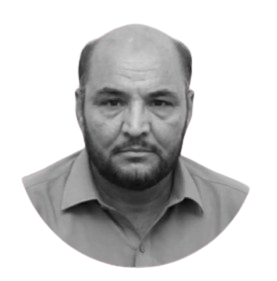
Dr Yousaf Ali
Healthcare in Khyber Pakhtunkhwa has long faced two major challenges: affordability and accessibility. For patients suffering from chronic blood disorders, emergency conditions, or diseases requiring long-term diagnostic monitoring, these challenges become even more severe. Alkhidmat Foundation Khyber Pakhtunkhwa is far beyond the typical welfare model, has established a comprehensive healthcare ecosystem that includes specialized thalassemia centers, ISO-accredited diagnostic laboratories, modern hospitals, blood banks, and mobile health units. This is the story of how volunteer-driven humanitarianism earned international certification and how it continues to save lives almost in every part of the province.
On April 23, 2026, Alkhidmat Foundation achieved a landmark milestone that set its facilities apart from many private and public healthcare providers in the region. The Alkhidmat Blood Bank and Diagnostic Center in Nishtarabad, Peshawar, received official accreditation from the Pakistan National Accreditation Council (PNAC) under the ISO/IEC 15189:2022 standard; the most rigorous international benchmark for medical laboratory quality and competence.
This certification is not merely a wall plaque. It attests that the center’s diagnostic testing and blood banking services comply with global standards for accuracy, patient safety, and quality management. The accreditation places the Alkhidmat facility among Pakistan’s most trusted diagnostic hubs. For the thousands of patients, particularly thalassemia sufferers requiring regular blood transfusions, this certification means reliable cross-matching, contamination-free blood products, and laboratory results that clinicians can trust without hesitation.
Khyber Pakhtunkhwa is home to an estimated 20,000 to 25,000 thalassemia patients, with approximately 5,000 new cases emerging every year. The hereditary blood disorder, passed from parents to children, requires lifelong blood transfusions and iron chelation therapy, medical costs that overwhelm most families. Alkhidmat’s Thalassemia Center in Nishtarabad Peshawar, Kohat, Charsadda and Abbottabad provide free treatment, regular blood transfusions, essential medications and laboratory tests.
Currently, the foundation supports over 1,300 registered thalassemia patients through free blood transfusions and comprehensive medical support across Peshawar, Charsadda, Kohat, and Abbottabad. The center goes beyond treatment, hosting annual awareness seminars and walks on World Thalassemia Day to educate communities about prevention, premarital testing laws, and the dangers of consanguineous marriages, the primary drivers of the disease in the region.
Alkhidmat hospitals and other health facilities across KP feature a fully operational 24-hour emergency block, equipped with initial diagnostic capabilities and round-the-clock medical care for residents. To facilitate the patients, Alkhidmat Hospital Dabgari Garden recently inaugurated a modern C-Arm imaging machine, a CSSD sterilization unit, laparoscopy equipment, a microbiology laboratory, and a fully automated blood bank with a biochemistry analyzer capable of conducting sophisticated diagnostic tests with unprecedented speed and accuracy.
This expansion has tangible results. The hospital reported a 100 percent increase in patient inflow over the past year, while diagnostic service utilization surged by 117 percent. In the last 12 months alone, more than 1,100 patients received completely free medical and diagnostic services under the Patient Welfare Fund. The facility also launched clinical hematology services under the supervision of Dr. Salman Arif, the first private-sector clinic in KP dedicated to modern diagnosis and treatment of blood diseases.
Beyond capital city, Alkhidmat’s footprint reaches deep into KP’s remote districts. In Kohat, the foundation laid the foundation stone for an emergency block at the Alkhidmat Naseem Khan Memorial Hospital, part of a broader push to expand emergency care access in the southern districts. In Dir Lower, President Dr. Hafeez-ur-Rehman inaugurated a modern medical block at Alkhidmat Hospital Timegara, outfitted with advanced equipment to serve the local community.
For villages perched on mountain slopes and communities cut off by seasonal floods, snowfall and landsliding conventional hospitals remain out of reach. Alkhidmat’s mobile health units (MHUs) bridge this gap. During the devastating floods of 2025, the foundation deployed MHUs across Buner, Swat, Malakand, Swabi, Dir Lower, and Shangla, providing free consultations, essential medicines, and emergency care to communities otherwise entirely isolated from medical services.
Each MHU functions as a mini hospital on wheels, staffed by doctors and paramedics, capable of addressing diarrheal diseases, skin infections, respiratory illnesses, and maternal-child health needs. Beyond emergencies, these units serve as permanent outreach platforms, conducting health awareness sessions on hygiene and nutrition in marginalized communities across the province.
Recognizing that diagnosis often costs more than treatment, Alkhidmat has prioritized expanding laboratory accessibility. In 2022, the foundation signed a memorandum of understanding with Khyber Medical University (KMU), under which KMU experts provide ongoing training and capacity-building support to the technical staff of the Alkhidmat Diagnostic Lab in Nishtarabad.
The foundation has also formalized community partnerships to extend care to marginalized groups. A memorandum with the Peshawar Press Club guarantees free general OPD services for journalists and their families, 50 percent discounts on all diagnostic tests, full waiver of admission fees, 30 percent discounts on major surgeries, and free treatment for thalassemia among members’ children. Additionally, the foundation coordinates with government health initiatives, including the KP government’s Sehat Insaf Card program, which also covers thalassemia treatment for eligible residents.
When a charitable organization pursues ISO 15189 accreditation, it signals a fundamental shift in philosophy: the recognition that good intentions alone do not save lives; competence, precision, and accountability do. Alkhidmat Foundation KP has transformed welfare medicine into a professional, standards-driven pursuit, operating not as a stopgap but as an essential pillar of the province’s healthcare infrastructure.
From the ISO-certified blood bank in Peshawar to the newly equipped hospital block in Dir Lower, and from the thalassemia patients receiving free transfusions in Kohat to the flood-stricken villagers in Swat accessing a mobile health unit, the network keeps expanding. For thousands of families across Khyber Pakhtunkhwa, Alkhidmat is not an alternative to the public health system but in fact it is the system that shows up, reliably, day after day, with care that meets the world’s highest standards.
Bio. Alkhidmat has acted efficiently and provided help to victims of disasters whether that was the recent 2022 Pakistan flood or the 2005 earthquake in Kashmir.
show more
It is a long established fact that a reader will be distracted by the readable content of a page when looking at its layout.
It is a long established fact that a reader will be distracted by the readable content of a page when looking at its layout.