
Any adult Muslim who is physically and financially able to travel can perform Umrah. There are no specific dates, so it can be planned according to personal convenience.
Umrah
Umrah is a voluntary Islamic pilgrimage to the Holy City of Makkah in Saudi Arabia. Unlike Hajj, which is obligatory once in a lifetime for those who are able and performed during specific dates, Umrah can be undertaken at any time of the year. It is an act of devotion through which Muslims seek spiritual purification, forgiveness, and closeness to Allah.
“And complete the Hajj and ‘Umrah for Allah…” – Surah Al-Baqarah (2:196)
Religious Importance
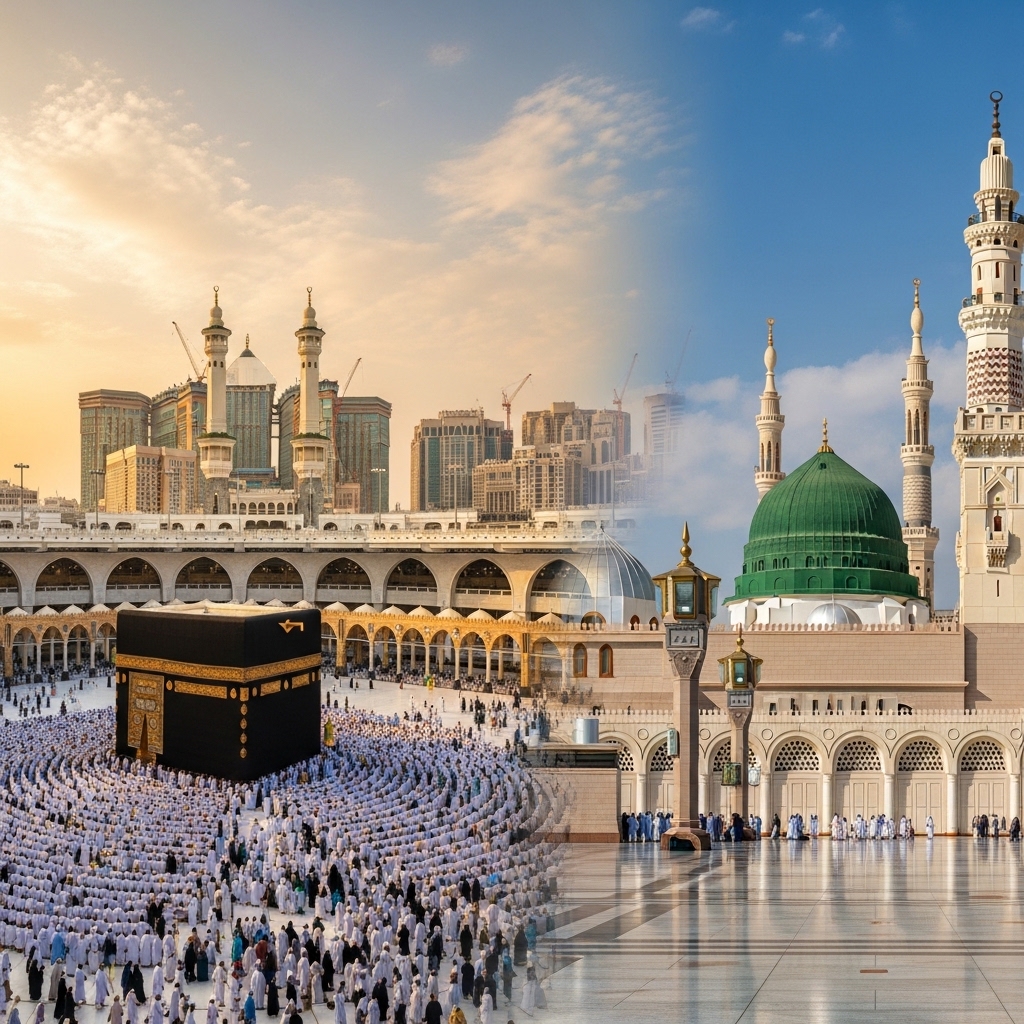
Although Umrah is not compulsory, it carries significant spiritual rewards. It serves as a means of expiation for minor sins and provides believers with an opportunity to renew their faith, reflect on their actions, and strengthen their relationship with Allah. Many Muslims perform Umrah multiple times throughout their lives as a form of continuous spiritual growth.
Major Rituals of Umrah
- Ihram: Entering a sacred state of purity with the intention (niyyah) of performing Umrah and wearing prescribed attire that symbolizes equality and humility before Allah.
- Tawaf: Circling the Holy Kaaba seven times in a counterclockwise direction as an expression of unity and devotion.
- Sa’i: Walking seven times between the hills of Safa and Marwah, commemorating the struggle of Hajar (AS) in search of water for her son Ismail (AS).
- Halq or Taqsir: Shaving (Halq) or trimming (Taqsir) the hair, marking the completion of the pilgrimage.
Spiritual Benefits
Performing Umrah offers a profound spiritual experience that encourages repentance, gratitude, and self-discipline. It fosters unity among Muslims from different cultures and backgrounds, all gathered in worship of one Creator. The journey allows individuals to disconnect from worldly distractions and focus entirely on faith, prayer, and remembrance of Allah.
Umrah serves as a powerful reminder of humility and equality. When pilgrims enter the state of Ihram, distinctions of wealth, status, and nationality disappear, reinforcing the principle that all believers stand equal before Allah. This experience nurtures sincerity, modesty, and a renewed sense of spiritual identity.
The rituals of Umrah strengthen patience and perseverance. Walking between Safa and Marwah and performing Tawaf around the Kaaba symbolize dedication, trust in Allah, and continuity of faith. These acts inspire believers to carry the same resilience and devotion into their daily lives after returning home.
Beyond the physical journey, Umrah often becomes a deeply transformative emotional experience. Many pilgrims return with renewed clarity, stronger commitment to prayer, and a greater awareness of their purpose. It marks a fresh spiritual beginning, encouraging individuals to improve their character, strengthen relationships, and live with greater mindfulness and gratitude.
Umrah serves as a powerful reminder of humility and equality. When pilgrims enter the state of Ihram, distinctions of wealth, status, and nationality disappear, reinforcing the principle that all believers stand equal before Allah. This experience nurtures sincerity, modesty, and a renewed sense of spiritual identity.
The rituals of Umrah strengthen patience and perseverance. Walking between Safa and Marwah and performing Tawaf around the Kaaba symbolize dedication, trust in Allah, and continuity of faith. These acts inspire believers to carry the same resilience and devotion into their daily lives after returning home.
Beyond the physical journey, Umrah often becomes a deeply transformative emotional experience. Many pilgrims return with renewed clarity, stronger commitment to prayer, and a greater awareness of their purpose. It marks a fresh spiritual beginning, encouraging individuals to improve their character, strengthen relationships, and live with greater mindfulness and gratitude.
Key Differences Between Hajj and Umrah
- Obligation: Hajj is obligatory once in a lifetime for every financially and physically able Muslim, while Umrah is voluntary and not compulsory.
- Timing: Hajj is performed during specific dates in the Islamic month of Dhul Hijjah. Umrah can be performed at any time of the year.
- Rituals: Hajj includes additional rituals such as standing at Arafat, staying in Muzdalifah, and stoning the pillars at Mina. Umrah consists primarily of Ihram, Tawaf, Sa’i, and shaving or trimming the hair. No Qurbani is required for Umrah.
- Duration: Hajj typically takes several days to complete due to its structured sequence of rituals. Umrah can usually be completed within a few hours.
- Spiritual Status: Hajj fulfills a pillar of Islam and holds a mandatory religious obligation. Umrah carries great reward but does not replace or fulfill the obligation of Hajj.
FAQs about Umrah
Who is eligible to perform Umrah?
Do women need a mahram to perform Umrah?
Requirements may vary depending on the country's regulations and current travel policies. It is recommended to check the latest guidelines before planning the journey.
Can Umrah be performed during Ramadan?
Yes, Umrah can be performed during Ramadan and is considered especially rewarding. Many Muslims prefer this time due to its spiritual significance.
How should one prepare for Umrah?
Preparation includes understanding the rituals, ensuring valid travel documents, arranging accommodation, and spiritually preparing through intention, repentance, and learning the proper method of performing Umrah.